The Blessing Of Life’s Refusal To Obey
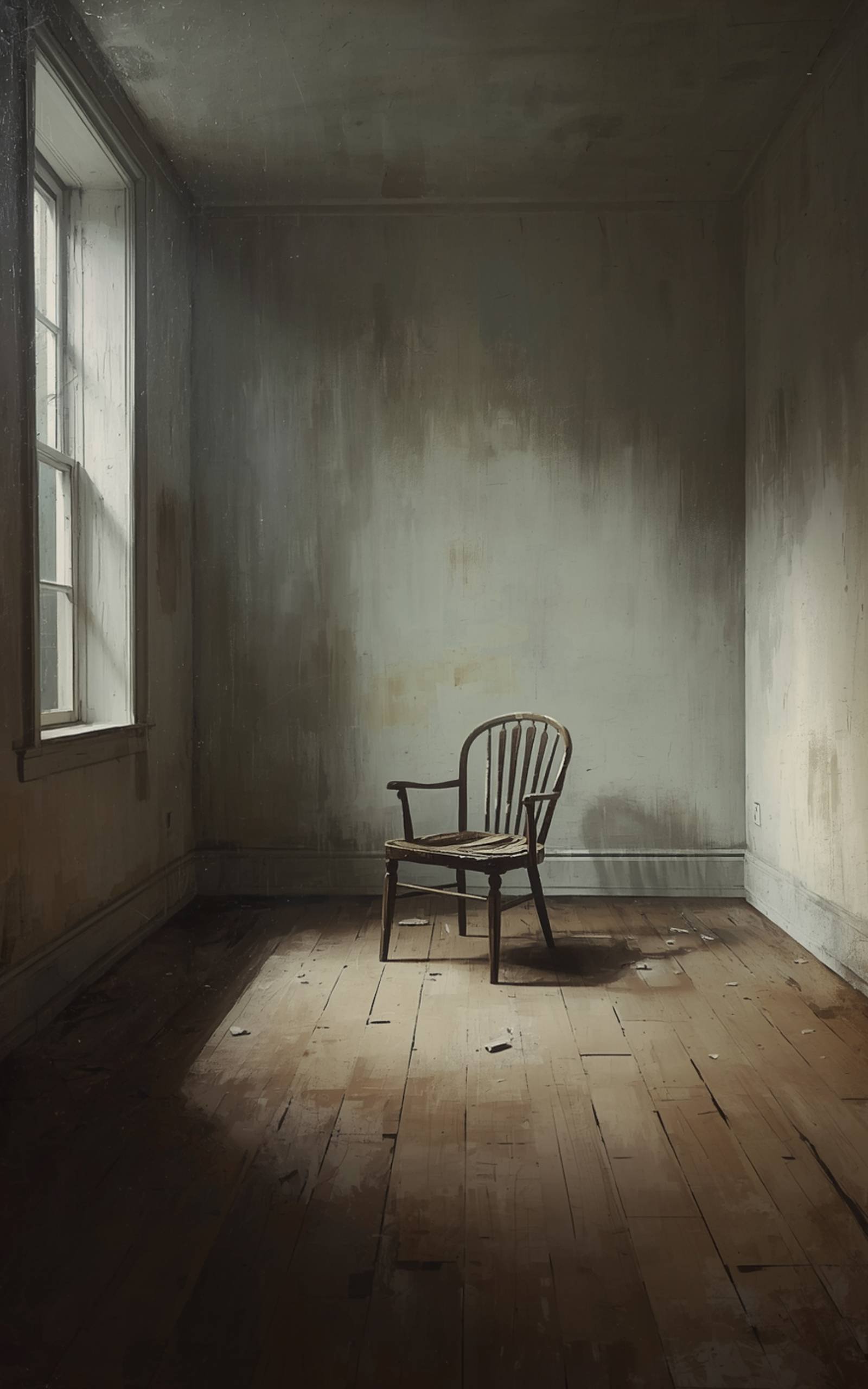
At first
life’s disobedience
feels like cruelty.
The plans are careful.
The intentions sincere.
The path ahead
has been drawn clearly enough
to believe
it should unfold exactly that way.
But life—
life rarely agrees.
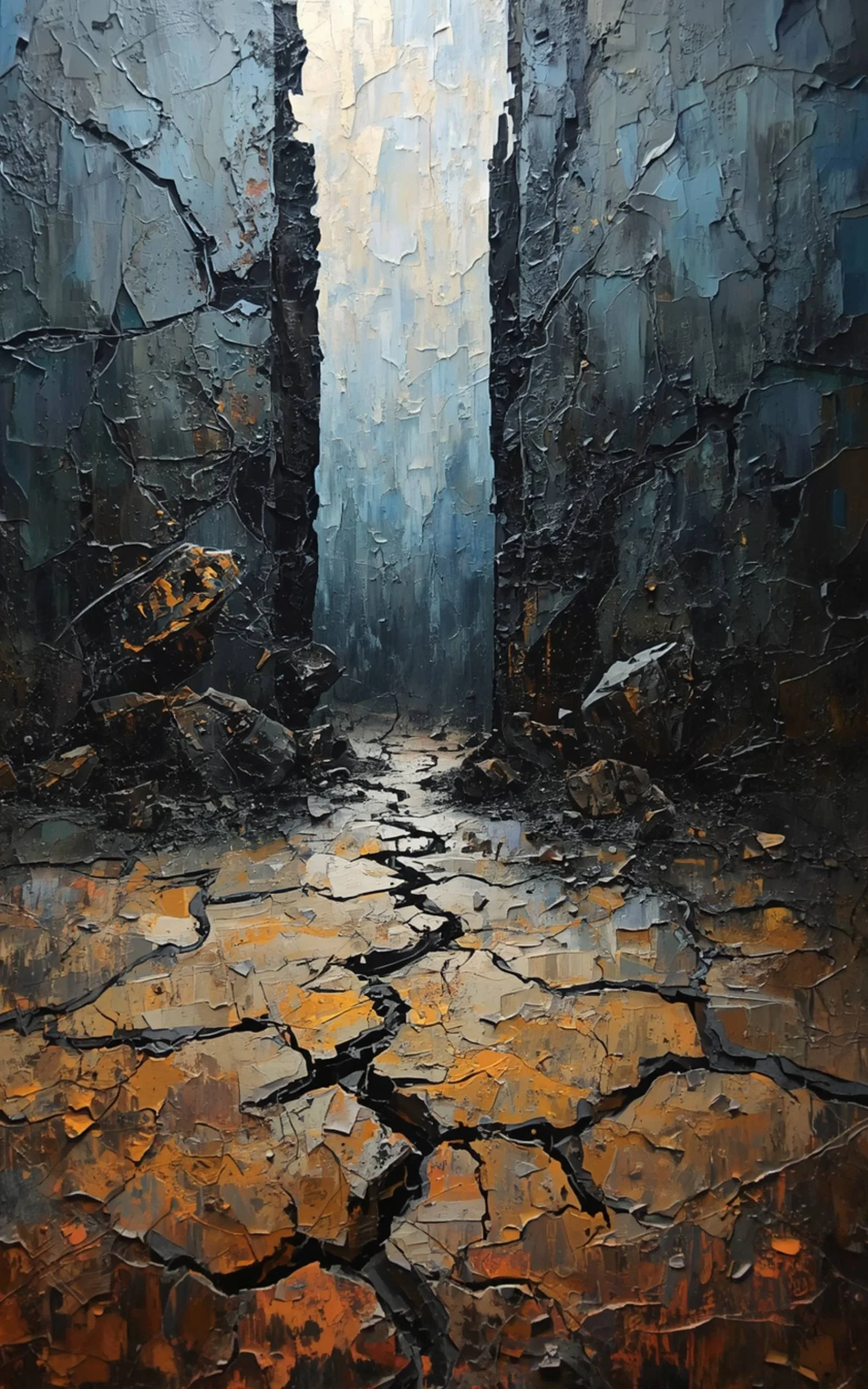
It shifts the horizon.
It closes doors
that seemed certain to open.
It removes entire futures
from the map
as though they had never been promised.
And in those moments
the heart believes
it is being denied.
Denied happiness.
Denied timing.
Denied the life
it so carefully imagined.
But time—
time has a strange way
of revealing the truth.
Because while life
refuses the plan,
it quietly begins
to offer something else.
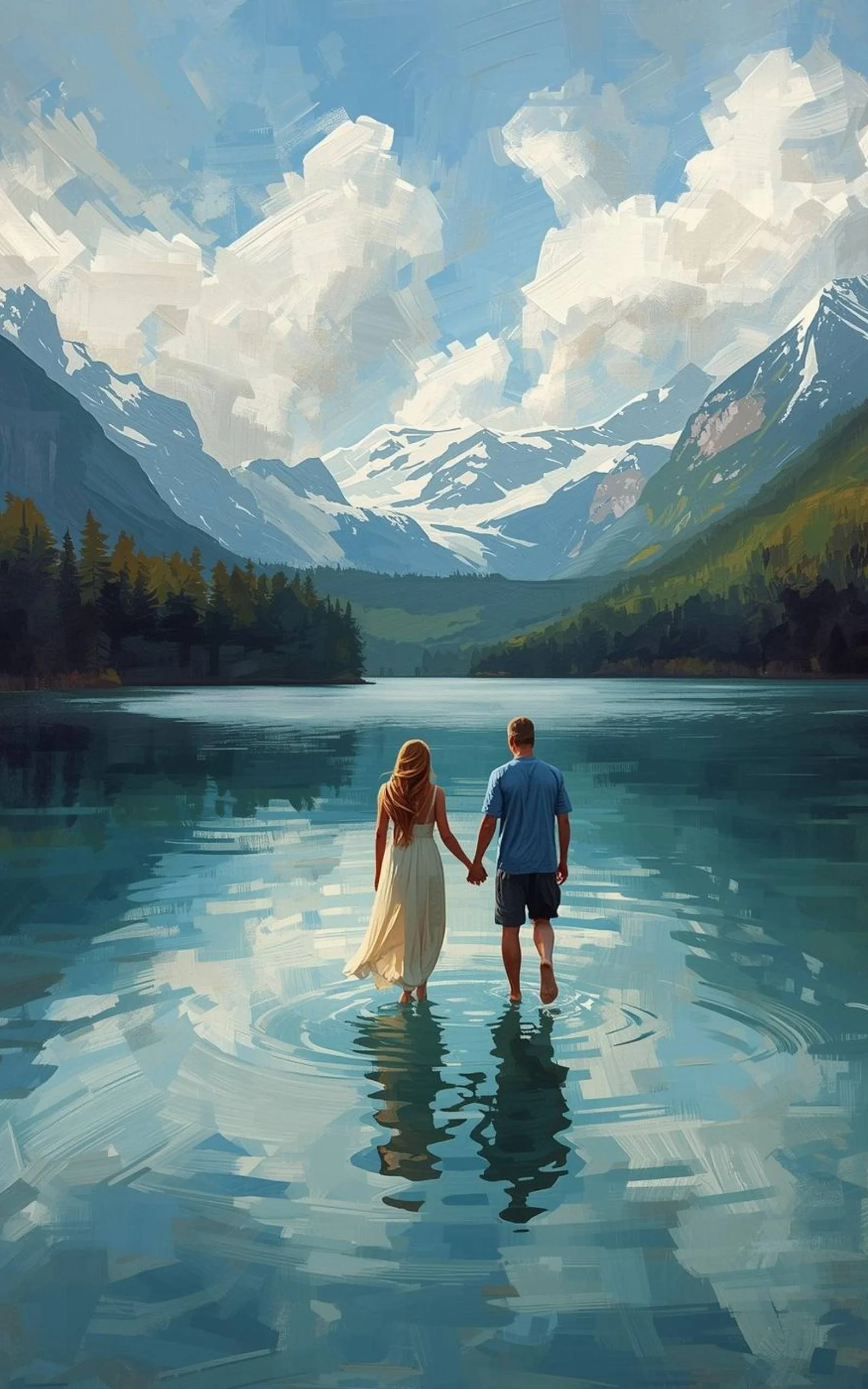
Another road appears
where the old one vanished.
A different door opens
beyond the wall that closed.
New people arrive
whose presence feels impossible
to imagine having lived without.
The future rearranges itself
in ways the earlier self
could never have predicted.
And slowly
the understanding grows.
What once felt like loss
was only redirection.
What once felt like refusal
was only protection.
Because the life
that finally unfolds
is often richer,
deeper,
and more beautiful
than the one
so carefully requested.
And this is the quiet blessing
hidden inside disappointment:
life does not obey
our small instructions.
It refuses to stay
inside the narrow architecture
of human expectation.
Instead
it moves with a larger wisdom,
reshaping the path
again and again
until it leads somewhere
the hopeful mind
never knew existed.
So when the future
refuses to follow your plans,
do not rush
to call it failure.
Stand still
long enough
to see what life
is building instead.
Because some of the most extraordinary lives
are born
the moment life
refuses to obey
and begins, at last,
to surprise you.
Keep My Words Alive
If this poem has stayed with you, you can help keep my words alive. Every bit of support helps carry the stories forward.
WHERE WORDS MEET MORNING LIGHT
BEGIN EACH DAY WITH SOMETHING BEAUTIFUL
Every morning at 11:11AM, I send a poem — sometimes soft, sometimes devastating, always true.
💚 Subscribe now to read and breathe and feel along with me 💚
Poetry by Britt Wolfe:
In moments of uncertainty, it is easy to believe that life has gone off course—that something has stalled, broken, or failed to arrive as it should. Yet time has a way of revealing that many of the twists and pauses we once feared were simply part of a larger unfolding we could not yet see. The natural world grows patiently, rivers carve their paths slowly, and the most meaningful parts of life often arrive in their own time. Trust The Unfolding is a reflection on this quiet wisdom: an invitation to step back from worry, release the need to control every outcome, and trust that life is moving with a deeper rhythm than we sometimes understand.💚
When people first imagine the future, their dreams are often shaped by what they can currently see and understand. The hopes we carry early in life may feel vast at the time, yet they are often small compared to the life that eventually unfolds. With time, many discover that the path ahead holds far more possibility than they once believed—new places, unexpected love, and moments of beauty that could never have been carefully planned. Small Dreams And Unexpected Abundancereflects on this quiet truth: that the dreams we begin with are often only the seeds of something far greater, and that life, when allowed to unfold, has a remarkable way of growing them into forests. 💚
When we are young, we often imagine the future as something we can design—carefully choosing our dreams and trusting that life will unfold exactly as we planned. But many people eventually discover a surprising truth: the path that actually unfolds rarely looks like the one we imagined. Doors close, plans dissolve, and the timing we thought was perfect passes us by. Yet with time and distance, it can become clear that life was not denying us the things we wanted—it was quietly making room for something larger. This poem reflects on that realization: the moment when we begin to see that the life we once hoped for was smaller than the one that arrived, and that the future may still be holding wonders we have not yet learned to imagine. 💚
Life often begins with plans—carefully imagined futures, quiet expectations, and a belief that happiness will arrive in the shape we design for it. But with time and experience, many people discover something far more profound: that the richest and most meaningful lives are rarely the ones we carefully construct. Instead, they are the lives that unfold when we loosen our grip on certainty and allow the unexpected to shape us. A Life Lived is a reflection on that quiet realization—the understanding that life, when trusted, often gives us more beauty, love, and wonder than we ever thought to ask for. 💚
In a world that constantly tells us to plan more carefully, work harder, and control every possible outcome, it is easy to believe that life will only unfold correctly if we manage every detail. But the truth many people eventually discover is far gentler—and far more freeing—than that. Some of the most meaningful moments in life arrive when we release our grip on certainty and allow the future to unfold in ways we could never have predicted. Let Go And Let Life reflects on the quiet wisdom of surrender: the understanding that life is not something to conquer or control, but something to trust, experience, and receive as it unfolds. 💚
Sometimes the moments that change our lives the most begin with decisions that make absolutely no sense to anyone watching from the outside. The safe path is always well lit, mapped out, and widely approved. But the most extraordinary chapters of life often begin when we step away from certainty and choose courage instead. This poem is about the power of boldness — about the moments when we take risks, surrender control, and trust that something greater will meet us on the other side of fear. Because sometimes the only way to discover what life can truly become is to leap before we know exactly where we will land. 💚
Sometimes the hardest role in life is not the villain or the hero, but the quiet supporter in the background — the one who claps the loudest, encourages the most, and helps hold everything together while someone else shines. Over time, it can begin to feel as though your purpose is simply to help others take centre stage, while your own voice grows quieter in the wings. The Backup Dancer is a reflection on that feeling — the quiet ache of being overlooked, the exhaustion of always supporting, and the moment someone begins to wonder what it might feel like to finally step into the light themselves.
This poem is written as a mythic narrative — an imaginative rendering of how some Christians understand the tension between divine love, human freedom, and historical suffering. It does not claim to resolve the problem of evil, nor does it justify atrocity. Instead, it steps into the traditional image of the Christian Creator and tells a story about hope, heartbreak, and the long arc of redemption as believers often describe it. It explores the difficult question of how faith attempts to reconcile a loving God with a world marked by human violence, repeated failure, and the stubborn persistence of hope.
This poem rejects the romanticized language often used to describe survival. It speaks to the kind of endurance that happens quietly, without witnesses or applause — the kind that is less about strength and more about necessity. Rather than framing resilience as heroic, it acknowledges the private collapses, the unseen fractures, and the simple fact that sometimes survival is not a choice but an obligation. It is a meditation on persistence when stopping was never an option, and on the complicated truth that surviving does not always mean emerging unscarred.
This poem celebrates the quiet bravery, but monumental courage, of beginning. It shifts the focus away from outcomes and applause, and toward the often-overlooked courage required to start at all. In a world that eagerly critiques attempts but rarely acknowledges the risk of trying, the poem reframes initiation itself as triumph. It is a tribute to those who choose motion over stagnation, vulnerability over preservation, and action over fear — and a reminder that the act of starting is, in many ways, the boldest victory of all.
This poem challenges the common phrase “it’s just business” by examining the invisible emotional investment behind meaningful work. For those who build with intention, dedication is never transactional; it is deeply personal. The poem reflects on the quiet sacrifices, late nights, and inner risk that accompany true craftsmanship, ultimately turning inward to writing as an act of exposure rather than production. It considers creative work not as a commodity, but as a reflection of the self — shaped by conviction, care, and the willingness to place something intimate into the world.
This poem explores the peculiar way memory functions in moments of profound shock or heartbreak. Rather than preserving the dramatic centre of a painful event, the mind often clings to seemingly insignificant details — light on dust, the hum of an appliance, the angle of a picture frame. In doing so, it anchors overwhelming emotion to something tangible and survivable. The poem considers this instinct not as randomness, but as a subtle form of endurance: the mind’s way of holding the unbearable by framing it through the smallest, strangest fragments of the moment.
This poem examines the recurring pattern of political movements cloaking themselves in the language of Christianity while advancing policies rooted in exclusion and control. From the 1920s, when the Ku Klux Klan invoked Protestant righteousness to justify terror and political influence, to contemporary leaders who publicly champion “Christian values” while enacting cruelty, the poem interrogates the gap between proclamation and practice. It is not an indictment of faith itself, but of the ways religion can be leveraged as moral cover for power — and of the damage done when sacred language is used to sanctify harm.
In the early 1920s, the Ku Klux Klan in Indiana operated not only through intimidation and spectacle, but through organizations with respectable, civic-sounding names such as the Horse Thief Detective Association. These fronts cloaked vigilantism and white supremacist control in the language of law, order, and community protection. This poem draws on that history to examine how systems of power can launder fear through bureaucracy and legitimacy. By placing past and present in close proximity, it asks readers to consider how easily the rhetoric of safety can be used to justify harm—and how often history repeats when we fail to recognize its patterns in real time.
This poem wrestles with the paradox of time: its relentless forward motion, its indifference to our readiness, and its inevitability. It confronts the sorrow of impermanence—the way time erodes everything we love—while also recognising that this very impermanence is what makes life luminous. Rather than separating grief from beauty, the poem suggests they are intertwined, that our ache is evidence of awareness, and that time’s cruelty is inseparable from the meaning it gives to our brief, unrepeatable lives.
In the 1920s, the Ku Klux Klan held extraordinary political power in Indiana, infiltrating state government, law enforcement, churches, and civic life. Its influence began to collapse in 1925 after Grand Dragon D.C. Stephenson abducted and brutally assaulted a young educator named Madge Oberholtzer. Before her death, Madge left a detailed dying declaration that exposed Stephenson’s violence. His conviction shattered the illusion of Klan invincibility, and when he retaliated by revealing the corruption of elected officials tied to the organization, its grip on Indiana rapidly disintegrated. This poem honours Madge’s courage and the broader truth history reveals again and again: when systems of power turn hostile and self-protective, it is often women who testify, document, organize, and insist on accountability. In moments when history feels as though it is circling back on itself, women continue to stand in the breach.
This poem explores the tension between safety and aliveness. While predictability can offer comfort and protection, it often comes at the cost of depth, growth, and meaningful experience. Rather than romanticizing danger, the poem considers the conscious decision to embrace uncertainty in a life that is fleeting and singular. It reflects on the idea that true richness lies not in preserving oneself from risk, but in choosing to engage fully — even when doing so means vulnerability, change, and the possibility of being undone.
This poem reflects on the idea that every life unfolds in seasons, some luminous and expansive, others heavy and uncertain. Rather than resisting the darker chapters, it considers the possibility that even these periods hold purpose — that growth often takes root beneath the surface, unseen and uncelebrated. It is a meditation on trust: trusting the timing of one’s life, trusting that presence itself is a gift, and trusting that even in difficulty, there is meaning in having been alive for this particular moment in history.
This poem reflects on the transformative forces that shape a life beyond intention or control. It explores the idea that growth is not engineered solely by our plans, but forged through surrender to experiences larger than our understanding. Rather than portraying struggle as destruction, it considers the refining power of challenge, loss, love, and change — the “fire” that tempers rather than consumes. At its heart, the poem invites a shift in perspective: to see surrender not as defeat, but as alignment with something vast, ancient, and profoundly creative.
This poem explores the radical idea that nothing is truly ordinary. Every breath, every second, every unnoticed decision exists at the intersection of countless improbabilities. Rather than defining miracles as rare or spectacular, the poem considers the possibility that transformation is constantly available—that change, both internal and external, is always waiting in the smallest hinge of a moment. In a universe that never repeats itself, every instant becomes charged with potential.
This poem considers the extraordinary privilege of consciousness in a universe built on impermanence. While everything around us is structured to change, decay, and eventually end, we are uniquely granted the capacity to choose how we move through that reality. It reflects on the unlikely gift of agency—the ability to live openly, love deliberately, and act with intention even in a world that offers no guarantees. In acknowledging life’s fragility, the poem ultimately honours the quiet grace of being alive at all.
This poem reflects on the enduring power of choice in a world that often feels beyond our control. It acknowledges collapse, chaos, and cruelty as recurring features of human history, yet centres the quiet authority each person retains within those conditions. Rather than denying darkness, the poem explores the radical possibility of choosing light, softness, and goodness in the midst of it. At its heart, it is a meditation on moral agency—the idea that while we cannot dictate what happens around us, we remain responsible for how we respond.
This poem reflects on the inseparable relationship between love and mortality. It considers the universal truth that everything we cherish is temporary, and that love, by its very nature, makes us vulnerable to loss. Rather than resisting that reality, the poem embraces it—suggesting that the risk of grief is not a flaw in the design of life, but part of its meaning. In a world where all things eventually end, the act of loving anyway becomes both an act of courage and a quiet form of defiance.
This poem imagines God not as a distant judge or rescuer, but as a witness bound by love to the consequences of free will. It explores the sorrow of creation—the grief of watching beings you love choose pain as their teacher, again and again—and the terrible necessity of allowing that choice to stand. Rather than offering comfort, the poem asks difficult questions about suffering, learning, and the cost of autonomy, while ultimately returning to the idea of a presence that does not intervene, but never abandons.
This poem is a meditation on survival as a natural law rather than a personal achievement. It looks to the living world—roots, seeds, stone, and wind—to explore how life persists in the harshest conditions without drama or permission. Rather than centring triumph, it honours endurance as something ancient, quiet, and collective: the unremarkable, relentless act of continuing. This is a poem about life itself refusing to end, and about the deep, elemental intelligence that allows growth to return even after devastation.
This poem is about the kind of love that teaches you endurance before it ever offers safety, and the moment you realise that survival is not the same as staying. It was written from a place of sorrow rather than anger, where choosing yourself is not an act of defiance but of necessity. This is a poem about unclenching, about returning love to the world without bitterness, and about the quiet grief that comes with honouring yourself when doing so means letting someone go.
This poem is about the quiet moment when love ends—not with a fight, but with an understanding. It was written from the space between compassion and self-preservation, where wanting the best for someone no longer means sacrificing yourself to give it. It reflects on the idea that while everyone longs to be loved, love alone cannot heal patterns that refuse accountability. This is a poem about release, about setting something down gently when carrying it has become a kind of harm, and about holding hope for another’s healing even after your own love has gone.
What Grows is a meditation on care — the quiet, patient work of tending something over time. It began with my love of plants and the peace I find in stewardship, propagation, and the slow miracle of life continuing under attentive hands. As I wrote, it became something more reflective and more painful: a way of grieving the relationship I never fully had, and the story I never got to know. This poem is about gardens both literal and imagined, about the understanding that comes too late, and about honouring someone not by rewriting the past, but by recognizing the beauty of what they managed to grow with the soil they were given.
This poem is about what happens when resistance gives way to recognition. I See You, Mara draws on the image of meeting one’s demons with steadiness rather than struggle — not to excuse them, defeat them, or banish them, but to see them clearly and remove their authority. Writing this was an act of choosing presence over reaction, friendliness over warfare, and self-trust over vigilance. It is a declaration that peace does not come from fighting what arises, but from sitting firmly in oneself while it passes through.
Britt Wolfe writes emotionally devastating fiction with the precision of a heart surgeon and the recklessness of someone who definitely shouldn’t be trusted with sharp objects. Her stories explore love, loss, and the complicated mess of being human. If you enjoy books that punch you in the feelings and then politely offer you a Band-Aid, you’re in the right place.
Much of life is spent trying to plan, predict, and guide the future toward the outcomes we believe will bring us happiness. When those plans fall apart—when doors close, paths disappear, or the timing refuses to cooperate—it can feel as though life is working against us. Yet with distance and perspective, many people begin to see something remarkable: that some of the most meaningful and beautiful chapters of their lives only began after the plans they once held so tightly failed to unfold. The Blessing Of Life’s Refusal To Obey reflects on that quiet realization—the understanding that life’s refusal to follow our instructions is not always a loss, but often the beginning of something far greater than we ever thought to ask for. 💚