Every book a beginning
·
Every word a forever
·
Every book a beginning · Every word a forever ·
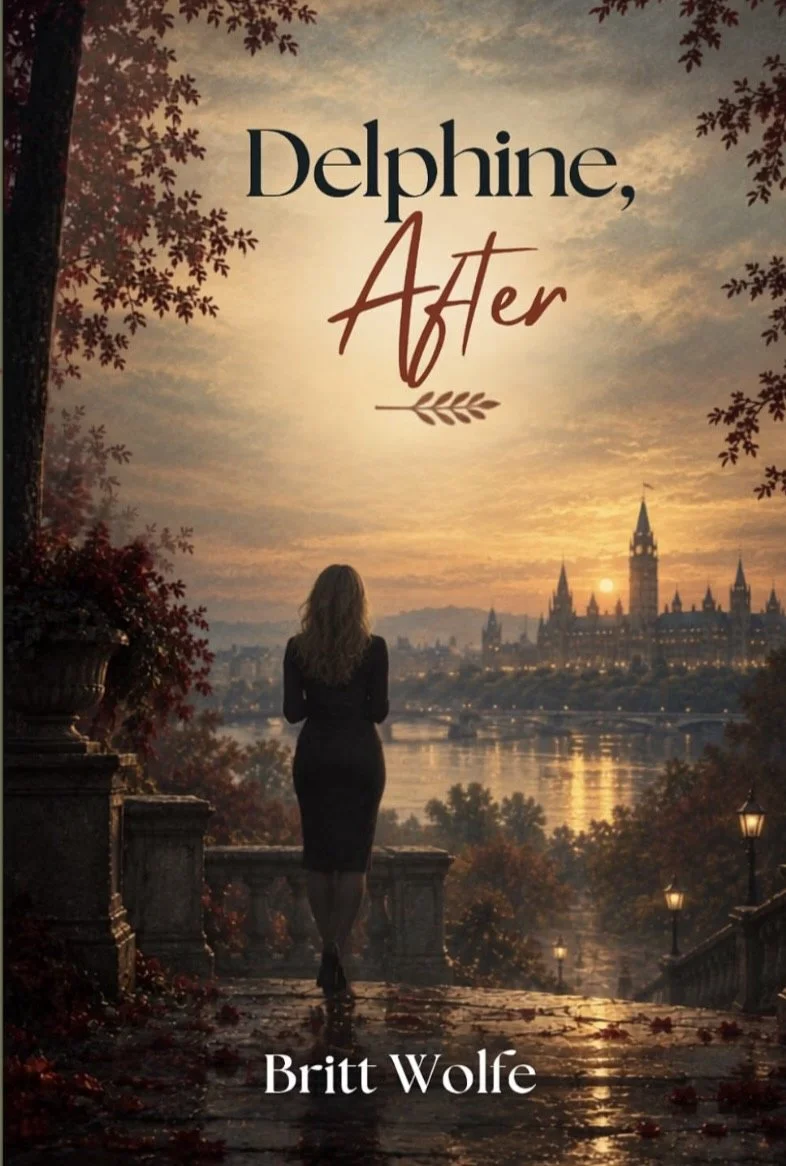
THIS HOLIDAY SEASON, FIND A LOVE STORY WORTH STAYING IN FOR.
A Love Story That begins Where Everything Else Ends
He lost his wife. She lost her husband. They found each other.
Neither of them was looking for a second chance—until New Year’s Eve brought them face to face. On the Edge of After is Britt Wolfe’s unforgettable debut novel, a beautiful, hopeful love story about what comes next when the worst has already happened. Raw, tender, and deeply human, this story will break your heart—and hand it back healed.
A perfect read for the quiet days between years—when endings still ache, and beginnings feel uncertain.
A perfect New Year’s read for anyone who loves love stories that stay with you.
Welcome to Wolfe + Words — Real Stories. Quiet Rebellion.
You’ll get a free novella, Every Road Leads Back To You — the story that launched my Songs To Stories series, inspired by the music of Taylor Swift.
This one, in particular, is rooted in Our Song and ‘Tis The Damn Season — two songs about coming home, and the love that waits there.
It’s heartfelt, healing, and yours to keep.
What I send are the things that matter most — new release drops, an update on my favourite animal, an exclusive poem you can only get as a subscriber, and other small gifts from my heart to yours.
Writing has saved me more times than I can count. Wolfe + Words is my quiet rebellion against the noise — a place for real stories, slow moments, and the kind of love that lingers long after “The End.”
I’d love to write to you.
Books And Stories By Britt Wolfe
Every book a beginning. Every word a forever.
I write love stories, ghost stories, and the quiet poetry that lives between.
From emotionally devastating novellas to haunting fiction and poetic reflections on rage, softness, and survival—
there's something here for every version of you.
Britt Wolfe // Prophecy
There comes a point when poems stop behaving themselves and start throwing bricks. This is that point. Here you’ll find politics dressed up as poetry, quotes that refuse to sit quietly, and the occasional video of me saying the thing you were probably hoping someone else would say first.
Welcome to Britt Wolfe // Prophecy: part witness, part warning, part “are you kidding me?”—all written one inconvenient truth at a time.
Click here to follow along—because it’s the right to free speech, not free speech for the right. And leftist free speech needs followers.
Click here to read poems from the Resistance.
We talk about addiction as if it exists in a vacuum — as if people simply choose despair, as if we didn’t build the world that breaks them. What We Call the Problem is a reckoning with that hypocrisy. It’s a poem about the faces we step over downtown, the lives lost to systems that profit from suffering and call it progress. It confronts the legacy of overprescribed pain, of capitalism without conscience, of a society that teaches children their worth is conditional — and then blames them for not surviving it. This poem asks us to stop calling people the problem and start calling them what they are: the evidence of our collective failure to love one another enough. 🕊️
So much of modern faith has forgotten its heart — mistaking performance for devotion, purity for holiness, exclusion for order. Fellowship at the Table is a return to what was always sacred: radical hospitality, lavish acceptance, and the barrier-breaking love at the centre of every true faith. It’s a reminder that your God does not demand perfection, only presence; that the table of belonging was never meant to be guarded, only gathered around. This poem invites us to come as we are — our doubts, our wounds, our wild, unpolished selves — and to make room for others to do the same. Because faith is not a contest of righteousness. It’s the simple, miraculous act of saying, sit with me anyway.🕊️
Women are taught to live in contradiction — to be small in the world and boundless within it. The Quiet Ones is about that impossible duality: the dissonance between how we’re seen and who we really are. It’s a poem about the noise of perception drowning out the truth of our power, about the violence of being misnamed and misunderstood, and the quiet rebellion of existing anyway. Beneath the softness the world demands lives a river — ancient, relentless, and waiting for permission to flood. This is for every woman who’s ever been called gentle while holding a storm in her chest.🕊️
Women are so often told to make history — to be exceptional, to break barriers, to be the first. But the truth is, that’s not freedom; it’s fatigue. I Don’t Want to Make History (I Want to Be One of Many) is a rejection of the mythology of the “first woman” and the loneliness it carries. It’s a poem about wanting a world where women’s achievements are no longer extraordinary, where equality isn’t newsworthy, and where the act of simply existing isn’t framed as defiance. This is a love letter to the future — to the chorus of women who will stand together, unexceptional and unstoppable, because they finally can.🕊️
We live in an age where performance often masquerades as progress — where outrage is curated, and empathy ends when the Wi-Fi does. The Armchair Activist is a reckoning with that hypocrisy, a verbal dissection of moral vanity disguised as virtue. But beneath its bite lies something deeper: a plea to remember the real fight. This isn’t a competition for who can look the most enlightened; it’s a battle for who stays awake while hate reorganizes itself into power. The poem asks us to stop policing one another’s imperfection and turn our eyes outward — toward the systems and voices that are turning cruelty into policy. Because in the end, awareness means nothing if it never leaves the chair.🕊️
There comes a point when outrage begins to sound like mourning. The Graveyard of Morality is an elegy for the virtues buried by greed, fear, and the politics of power — but it’s also a call to the living. It’s about standing knee-deep in the wreckage of decency and daring to remember what once made us human. This poem speaks to those who still light candles in the dark, who still whisper words like empathy and truth as if they are spells. It’s a reminder that morality may be buried, but it is not dead — and that tending to its grave is, itself, an act of resurrection.🕊️
There’s a particular kind of fury reserved for the quiet thefts — the ones so ordinary we’re taught to thank the thief. They Controlled My Body, Then They Commented On It. They Made Me Less Than, Then They Stole My Pockets. I Want My Fucking Pockets Back. is a battle cry for every woman who’s been silenced, censored, dressed up, dressed down, legislated, laughed at, and still expected to smile about it. It’s about the absurdity and exhaustion of centuries of control disguised as care, and the radical act of reclaiming space — physical, emotional, and literal. It’s not just about pockets; it’s about power, autonomy, and the right to carry our own lives in our own hands.🕊️
The Last Thought He Owned is a dissection of one man’s intellectual decay — the slow conversion of curiosity into doctrine. It follows a self-proclaimed freethinker as the algorithm flatters, simplifies, and finally consumes him, leaving only conviction where complexity once lived. Told in the language of cross-examination, this poem exposes the hollow theatre of certainty: the man who mistakes his echo for evidence, his bias for bravery, and his obedience for independence. It’s not a tragedy. It’s a deposition — and the verdict is already written.🕊️
The Choir of One is a poem about the illusion of individuality in the age of algorithms — the echo chamber masquerading as free thought. It imagines a chorus of men, each convinced he’s the sole voice of reason, chanting the same slogans in perfect unison. It’s about how certainty becomes communion, how rebellion becomes brand, and how the language of independence can be co-opted into the loudest conformity of all. This poem is both indictment and elegy — a requiem for critical thought, sung by those who believe they invented it.🕊️
Man in a Feedback Loop traces the digital fossilization of a single mind — a man who begins as curious and ends as convinced. It’s a study in how ideology seduces intelligence: how the algorithm rewards outrage, how repetition becomes religion, and how conviction calcifies until there’s no room left for air. Each scroll is another stratum, another deposit of certainty, until what was once fluid thought hardens into dogma. This poem is about that burial — the slow, silent extinction of curiosity beneath the weight of its own reflection.🕊️
In the digital age, seduction doesn’t come with a face — it comes with an algorithm. The Mirror Learns to Talk Backimagines the voice of that machine: smooth, omniscient, and intimate enough to feel like love. It’s the whisper that flatters and isolates, convincing lonely men that they’re enlightened while feeding them the same recycled outrage disguised as revelation. This poem is about the danger of being seen too perfectly, too constantly — about the algorithm that doesn’t just learn who you are, but who you’ll become when it starts speaking in your own voice.🕊️
There is no hypocrisy more grotesque than the ladder paradox — the spectacle of those who were lifted by collective care only to condemn it once they’ve reached the top. This poem is an indictment of that moral amnesia: the politicians, the pundits, the profiteers who were raised by public education, public healthcare, and public kindness, and who now spit on the very hands that steadied them. It is a reckoning with the violence of ingratitude — a reminder that the ladder they burn was never theirs alone, and that someday, the smoke will spell their names.🕊️
This poem was written out of exhaustion—exhaustion with the constant politicization of existence. Loving someone, changing your body, choosing your pronouns, living as yourself—none of that is political. It’s personal. It’s human. Yet again and again, those in power twist identity into outrage, convincing people to vote against their own best interests just to punish others for living freely. The Audacity of Existing is a reminder that equality is not a debate, humanity is not a platform, and other people’s joy is not your oppression. 🕊️
This poem was written in mourning for the way humanity itself has been politicized. I wanted to explore how the right has built an empire out of fear—turning joy, gender, love, and simple existence into weapons of distraction, so their followers will vote not for progress but for punishment. The Commerce of Contempt is a meditation on that manipulation—how the powerful manufacture outrage to conceal greed, how ordinary lives are twisted into symbols, and how, despite it all, love remains our quiet defiance. Because living freely, tenderly, authentically, will always be the most radical act of all. 🕊️
This poem was written out of the deep grief and anger of watching what happens when politics is no longer about policy, but about hate. When leaders like Danielle Smith (and Trump before her) thrive not because they offer solutions, but because they promise punishment—punishment of the vulnerable, of the different, of the people their supporters already resent. It doesn’t matter if those same supporters are suffering too, if they’re being stripped of their own healthcare, their own future—it only matters that someone else suffers more. When Hate Becomes Policy is a reckoning with that bargain, and a reminder that cruelty is not strength, and hate is not leadership. 🕊️
This poem came from a place of grief and fury. Evil clawing for power is no surprise—it always has, and it always will. What devastates me is how willingly so many surrender their own freedoms just to watch someone else lose theirs. How they cheer for cruelty as though it were justice, how they vote against their own lives if it means punishing those they do not want to exist. The Silence That Votes is a reckoning with that truth: that tyranny survives not only through those who seize power, but through those who stand by and let it happen.🕊️
This poem was born out of frustration and fire—out of watching Alberta’s so-called “freedom” rebranded as privatization, censorship, and the slow starving of the very people who built this province. The Crown of Ash is not just a warning—it’s a reminder. That every library they close, every hospital they gut, every voice they try to silence is fuel for the change already gathering. They may call it chaos when the people finally rise, but we will know the truth. We will call it justice.🕊️
There are moments in history when you can feel the air itself tightening, when silence is no longer silence but pressure—thick, heavy, impossible to ignore. That’s what I wanted this poem to capture: the sense that we are standing at the edge of something immense. Not the soft kind of change, but the kind that rattles foundations, that collapses rotten scaffolds, that makes the powerful tremble and the weary breathe again. This poem is for anyone who has ever felt that pull in their bones, that certainty that the world cannot stay as it is. It is a reminder that what they will call chaos, we will name as freedom. What they will fear, we will claim as hope.🕊️
This poem is an invitation and a vow: a vision of a world rebuilt on radical love and stubborn generosity, one wide enough to hold every body, every truth, every strange and glorious way of being. Everyone and Everyone asks us to imagine architecture, language and law that cradle rather than exile, to practise the hard labour of belonging, and to treat acceptance not as softness but as audacious, sustaining work. It is both blueprint and benediction — a lyrical demand that we make room, fiercely and forever, for one another.🕊️
The word woke has been twisted, mocked, and wielded as an insult by those who fear its true meaning. But strip away their distortion, and what remains is something powerful and profoundly human: the act of staying awake to injustice, of caring deeply for one another, of refusing to look away when cruelty demands silence. Be Woke, My Friends is a reclamation of that word—a reminder that compassion is not weakness, that justice is not madness, and that choosing to see and to act is the bravest thing we can do.🕊️
Capitalism Killed Us is both elegy and indictment—a vision of the world after collapse, where humanity has been undone not by fate but by its own hand. It speaks to the slow violence of greed disguised as progress, of profit worshipped at the cost of survival. In its aftermath, the poem mourns the silenced earth and the hollow monuments we left behind, while forcing us to confront the truth: that the system we upheld was never designed to save us, only to consume us. It is a requiem for what was lost, and a warning for what we might still choose to preserve.🕊️
Poetry By Britt Wolfe
Poetry is just journaling—but make it cryptic, dramatic, and a little unhinged. I write about love, grief, betrayal, and the kind of simmering resentment that should be unpacked in therapy but is instead served fresh, wrapped in metaphor and the occasional unnecessary comma. It’s cheaper than counselling and way more fun.
Now—let’s get one thing straight: these poems are fiction. Fiction. They are not confessions. They are not evidence. They are not codes, subtweets, or secret messages. They are emotionally heightened, creatively exaggerated, and occasionally written just because the cadence was nice. If you think one might be about you—it’s not. Unless you’re stalking me and making my life harder, in which case… hi 👋🏻 still not about you. Please go away.
What you will find here is razor-sharp honesty, vulnerability with bite, and the literary equivalent of crying in public but making it look hot. The kind of commentary that feels too personal—because it’s mine. Not yours.
A new poem goes up every single day. So refresh the page, let your heartbreak (or your rage) settle in, and maybe take everything a little less personally. Or, you know, just leave me alone.
Click here to read all my sad, sad poems.
This poem examines the quiet, normalized violence of overgiving—the way devotion is so often measured by depletion, and care becomes indistinguishable from self-erasure. Burning Ourselves to Ash is not about individual failure, but about a shared cultural script that rewards endurance while punishing rest, that praises those who disappear in service of others and calls the outcome burnout instead of inevitability. It is a reckoning with the systems that rely on certain people to keep the fire going, and a refusal to keep mistaking self-immolation for love.
This poem is a reclamation—not born from anger, but from precision. It speaks to the moment when endurance stops being admirable and starts being extractive, when patience reveals itself as a cost rather than a virtue. I Don’t Have Time To Let You Waste Mine is about the quiet authority that arrives when we recognize time as a finite, non-renewable resource—and ourselves as worthy of protecting it. It is an articulation of boundaries set without apology, of clarity chosen over comfort, and of the profound self-respect required to stop negotiating our lives down to fit someone else’s delays.
The Non-Participation in the Emotional Economy That Keeps Us Bound is a reclamation of agency rooted in the radical simplicity of release. Inspired by the principles explored in Letting Go, this poem examines how much of our suffering is sustained through unconscious participation—through guilt, over-responsibility, and the belief that endurance is a form of love. Rather than advocating detachment, it offers discernment: a turning away from emotional transactions that demand self-erasure. This is a poem about energetic sovereignty, about choosing peace without justification, and about the quiet, transformative freedom that emerges when we stop carrying what was never ours to hold.
The Most Violent Thing of All confronts time not as an abstract concept, but as the most relentless and devastating force humans endure. This poem explores the slow, cumulative violence of loss—the way time dismantles love, presence, and certainty without spectacle or mercy, leaving grief to linger long after the damage is done. It speaks to the shared human experience of mourning what was taken incrementally, imperceptibly, and irreversibly. Rather than offering comfort, the poem names the sorrow many carry silently: the ache of living forward while love is forced to remain behind.
You Just Have To Roll Your Sleeves Up is a meditation on effort as an ethical choice rather than an emotional state. Rejecting motivation and inspiration as prerequisites, this poem centres labour itself as the point of transformation—where clarity, capability, and self-respect are built through action. It reframes grit not as spectacle or suffering, but as quiet consent to engage with difficulty honestly and repeatedly. This is a poem about beginning without guarantees, meeting reality with one’s hands, and allowing the work to do its shaping.
One Pole At A Time is inspired by the quiet, radical practicality of Terry Fox’s Marathon of Hope—a reminder that even the most extraordinary acts are built from ordinary, repeated decisions. Rather than mythologizing endurance, this poem focuses on the discipline of breaking the impossible into survivable increments, choosing forward motion without needing to conquer the whole distance at once. It invites the reader to reframe their own challenges through this lens: not as overwhelming totals, but as a series of reachable markers. This is a poem about hope made actionable, about persistence without spectacle, and about the power of committing to the next step—again and again.
Dragging Mud Across a Clean Floor is a poem about boundary violation after healing—about the particular violence of intrusion once hard-won peace has been established. Using visceral metaphor, it captures the exhaustion and revulsion of having one’s recovery repeatedly contaminated by someone unwilling to respect distance or accountability. This poem is not fueled by impulsive anger, but by clarity: it distinguishes between accidental harm and deliberate disregard, and names the quiet cruelty of insisting on access where none is welcome. At its core, it is a declaration of sovereignty—of the right to keep what has been cleaned, protected, and reclaimed.
I Will Drop Everything to Hang Out With You is a celebration of long-term love that refuses the narrative of diminishment. This poem explores a partnership defined not by obligation or routine, but by sustained desire, curiosity, and chosen proximity. Thirteen years in, it honours a love that remains conversational, magnetic, and deeply playful—a relationship where presence is still the highest priority. Rather than dramatizing romance, the poem elevates its quiet miracle: the continued, enthusiastic preference for one another, again and again, without fatigue or compromise.
How Alive I Am Willing to Be is a declaration of agency in the act of living. This poem frames aliveness not as something granted or accidental, but as a conscious choice—one that requires openness to risk, sensation, and transformation. It reflects on the tension between safety and immersion, asking what it truly costs to remain present in one’s own life. With measured intensity, the poem honours courage not as spectacle, but as the daily decision to feel deeply, move toward experience, and inhabit the world without numbing what makes it vivid. This is a meditation on choosing life fully, deliberately, and without apology.
Adaptation explores the invisible ways people evolve in order to survive emotional injury. Rather than depicting resilience as dramatic transformation, this poem traces the subtle recalibrations that occur beneath the surface—shifts in perception, boundary, and self-preservation that are almost imperceptible from the outside. It reflects on adaptation as a form of intelligence: a quiet, strategic reordering of the self that allows tenderness to endure without remaining exposed to harm. This is a poem about survival not as spectacle, but as precision—and about the profound life that continues after pain has reshaped the landscape within.
The Bones Are Good is a meditation on lineage, resilience, and the relief of rediscovering where one truly comes from. Through the language of roots and growth, this poem reflects on how dysfunction in one small part of a family can obscure the strength of a much wider inheritance. It explores the joy of reconnection—of finding abundance, warmth, and care in extended kinship—and reframes belonging not as proximity to harm, but as alignment with what is enduring and life-giving. This is a poem about returning to what was always there, waiting to be claimed.
The Empath and The Worm examines the asymmetric psychological dynamic between empathic individuals and narcissistic personalities, grounding its imagery in well-documented patterns of manipulation, projection, and emotional predation. Drawing on psychological concepts rather than metaphorical mysticism, this poem explores how empathy is exploited as a resource, how boundaries are reframed as harm, and how care is weaponized against those inclined to offer it. Rather than dramatizing the encounter, the poem anatomizes it—revealing disengagement, not confrontation, as the true point of power. This is a poem about recognition, withdrawal, and the quiet finality of choosing not to be consumed.
The Golden Egg is a meditation on the cost of conditional love within narcissistic family dynamics, focusing on the child elevated, protected, and quietly erased all at once. This poem approaches the golden child not as a villain, but as a casualty—shaped by approval, deprived of autonomy, and taught that safety depends on perfect alignment. It explores how borrowed power replaces identity, how specialness becomes a trap, and how the absence of a self is often mistaken for strength. Above all, this poem is an act of mourning: for the person who might have existed if love had not required such total surrender.
This Is Not a Game is a declaration of irrevocable boundary, written in response to repeated violations disguised as persistence, entitlement, or misunderstanding. This poem rejects the minimization of harassment and exposes the manipulation embedded in refusing to accept no as an answer. With controlled fury and precise language, it dismantles the fantasy that access can be negotiated once consent has been withdrawn. This is not a plea or an explanation—it is a formal severance, asserting autonomy with clarity, contempt for intrusion, and the certainty of an ending that does not require agreement.
The Misery You Make examines suffering not as an accident of circumstance, but as a consequence of sustained choice. This poem interrogates how comfort, when paired with entitlement and avoidance, can curdle into resentment—and how that resentment is often externalized through harm inflicted on others. Rather than locating misery in trauma or loss, it exposes the quieter, more unsettling reality of self-manufactured suffering: the kind created to avoid accountability, introspection, and growth. This is a poem about ethical causality—and about the cost of refusing to become more when nothing is standing in the way.
All Their Projections is a clinical and moral dissection of narcissistic defence, examining how projection functions not as a momentary lapse, but as a structural necessity within narcissistic pathology. Drawing on psychological language and diagnostic insight, this poem exposes the mechanisms by which shame, guilt, and aggression are expelled and reassigned to others in order to preserve grandiosity and avoid accountability. It interrogates the violence of moral inversion—where the harmed are recast as perpetrators and truth itself becomes a threat—and reveals projection not as power, but as evidence of a psyche organized around evasion rather than integrity. This is a poem that names the system, not just the damage.
Attitude of Gratitude interrogates the difference between performative positivity and lived, authentic gratefulness. Rather than presenting gratitude as a prescribed mindset, this poem explores it as a slow, earned orientation—one that cannot bypass pain or be adopted on command. With philosophical restraint, it traces the space between knowing and embodying, acknowledging the work required to arrive at gratitude without denying truth. This is a poem about refusing spiritual shortcuts, choosing authenticity over optics, and trusting that real gratefulness emerges not through posture, but through presence.
Listening to Brené Brown and Walking in the Woods is a meditation on healing that resists drama and instead returns to wonder. Rather than recounting pain directly, this poem follows the subtle reawakening that happens when insight meets movement, and when the natural world offers its steady, ancient reassurance. It reflects on the sacredness of breath, body, and belonging, suggesting that meaning—and even divinity—are found not in answers, but in the shared continuity of life itself. This is a poem about remembering how to be present, and about the soft, enduring companionship of healing as it unfolds.
Pushing Harder is a meditation on disciplined ambition—the kind rooted in responsibility rather than fear. This poem examines the drive to create, build, and refine across every aspect of life, while refusing to romanticize exhaustion or credit suffering for strength. It acknowledges the cost of relentless momentum, the lessons learned through fracture and failure, and the evolution from force to discernment. Ultimately, this poem celebrates perseverance as a cultivated skill: a form of intelligence that knows when to press forward, when to listen, and how to pursue excellence without turning ambition into self-harm.
Boxes reflects on the subtle, often well-intentioned ways we organize our relationships—and the unseen cost of that order. Rather than condemning the impulse to define roles, this poem examines how categorization can quietly limit intimacy, curiosity, and growth. It considers what is lost not through conflict or refusal, but through assumption: the connections that never deepen because they were never allowed to. This is a meditation on the difference between kindness and openness, and on the expansive possibilities that remain untouched when we mistake clarity for completion.
(I Didn’t Just Survive Them) I Outgrew Them reframes survival as a threshold rather than an identity. This poem moves beyond the language of endurance to explore what happens after harm is metabolized—when growth creates distance, scale, and perspective that render former threats irrelevant. It is not concerned with proving resilience or revisiting injury, but with naming the quiet power of expansion: the moment when a life becomes too large to be shaped by those who tried to contain it. This poem stands as a declaration of arrival—not back to who one was, but forward into something bigger.
The Ones Who Couldn’t Stop examines the moral failure at the centre of sustained harm: the refusal to interrupt oneself. This poem shifts focus from the survivor to those who perpetuate cruelty not because they must, but because stopping would require accountability, effort, and change. It interrogates how violence is normalized through momentum, how harm is passed forward under the guise of inevitability, and how those who cannot stop often resent anyone who proves that stopping was always a choice. This is a poem about repetition as cowardice—and about the quiet threat posed by anyone who steps out of the cycle.
I Just Kind Of Stopped is a poem about what happens when harm is pushed so far that stopping becomes the only remaining act of agency. It explores the moment when survival no longer looks like fighting back, but like stepping out of reach altogether—refusing to continue feeding cruelty, manipulation, and collective violence. Through the imagery of vultures and harbingers, the poem reframes withdrawal not as defeat, but as a strategic and transformative victory. This is a poem about choosing containment over collapse, silence over spectacle, and discovering that what looks like an ending can become the beginning of freedom.
It Must Be Amazing examines the internal architecture of narcissistic self-protection—the psychological mechanisms that allow harm to be inflicted without ever being owned. This poem dissects the quiet brilliance with which responsibility is deflected, memory is rewritten, and accountability is transformed into accusation. Rather than centring the damage itself, it exposes the systems of thought that make such damage possible, illuminating how blame is off-loaded and innocence preserved at all costs. This is a poem about the privilege of never reckoning—and the invisible labour carried by those left to absorb what someone else refuses to hold.
You Know Who You’re Getting Into Bed With is a reckoning disguised as prophecy. This poem examines the conscious choice to align with instability, exploitation, and scorched-earth power, and the dangerous illusion that proximity to destruction offers protection. Drawing on the myth of those who would rather rule over ashes than relinquish control, it exposes the lie of mutual assured destruction and reminds the reader that complicity does not grant immunity. This is a poem about knowing—and choosing anyway—and about the kind of ruin that remembers exactly who stood where when the fire was lit.
I Was Never Beautiful rejects the narrow, conditional definitions of beauty placed on women and interrogates the cost of being valued primarily for appearance. Rather than mourning what was withheld, this poem reclaims the deliberate choice to want more—to seek substance, impact, and selfhood over admiration. It speaks to the hunger to be taken seriously in a world that rewards palatability, and to the power of building an identity rooted in growth, intellect, and presence rather than something time can erode. This is a poem about choosing depth over decoration, and becoming over being seen.
Trapped In Your Obsession confronts the rarely named violence of being watched, tracked, and emotionally claimed without consent. Written to collapse the distance between reader and subject, this poem immerses the body in the experience of unwanted fixation—the slow erosion of safety, autonomy, and selfhood that occurs when someone refuses to let go. It explores how obsession masquerades as care, how attention can become a form of restraint, and how being seen without being respected can make even existence feel unsafe. This is a poem about the cost of being made into an object—and the quiet, defiant survival of those who endure it.
Metallica VS. Megadeth uses one of rock music’s most enduring rivalries as a metaphor for the quiet damage of comparison and the radical freedom that comes from choosing self-alignment over envy. It explores how success can still feel hollow when it is built in reaction to someone else’s trajectory—and how true mastery arrives only when the gaze turns inward. This poem traces the shift from fear-driven striving to self-possessed growth, ultimately claiming a hard-won truth: greatness is not measured against others, but defined by the moment you stop listening for who’s ahead and start becoming inevitable yourself.
The Pull of Forward is a meditation on the ancient, almost animal force that lives beneath human ambition—the instinct not merely to survive, but to move, to seek, to become. It explores the uneasy truth that stillness, even when safe, can feel like a kind of erasure, and that our desire to grow is not a flaw to be corrected but an inheritance written into our bodies. This poem speaks to the part of us that refuses complacency, that listens for the horizon even when life is comfortable, and that understands forward motion not as greed or restlessness, but as reverence for being alive.
Maybe She Is Sad? is a meditation on the complicated alchemy of cruelty—how some people move through the world wounding others not out of power, but out of an unspoken, unendurable sorrow. This poem considers the possibility that beneath hostility lies grief, that beneath arrogance lies ruin, and that behind even the sharpest behaviour may be a story of squandered potential and unmet promise. It doesn’t excuse the harm inflicted; instead, it explores the quiet, difficult work of understanding it, of holding sorrow and accountability in the same hand. Ultimately, this piece becomes an exploration of forgiveness—not as reconciliation, but as a sacred act of self-preservation, a compassionate distance that honours healing without reopening old wounds. 💚